ServicesReverse Osmosis
Reverse Osmosis in Carrollton
Our under-sink reverse osmosis systems send kitchen water across a semi-permeable membrane that holds back dissolved minerals, chlorine taste and many trace contaminants. You get a separate faucet for drinking, cooking and ice, with the membrane and tank sized to how many people in your home use it.
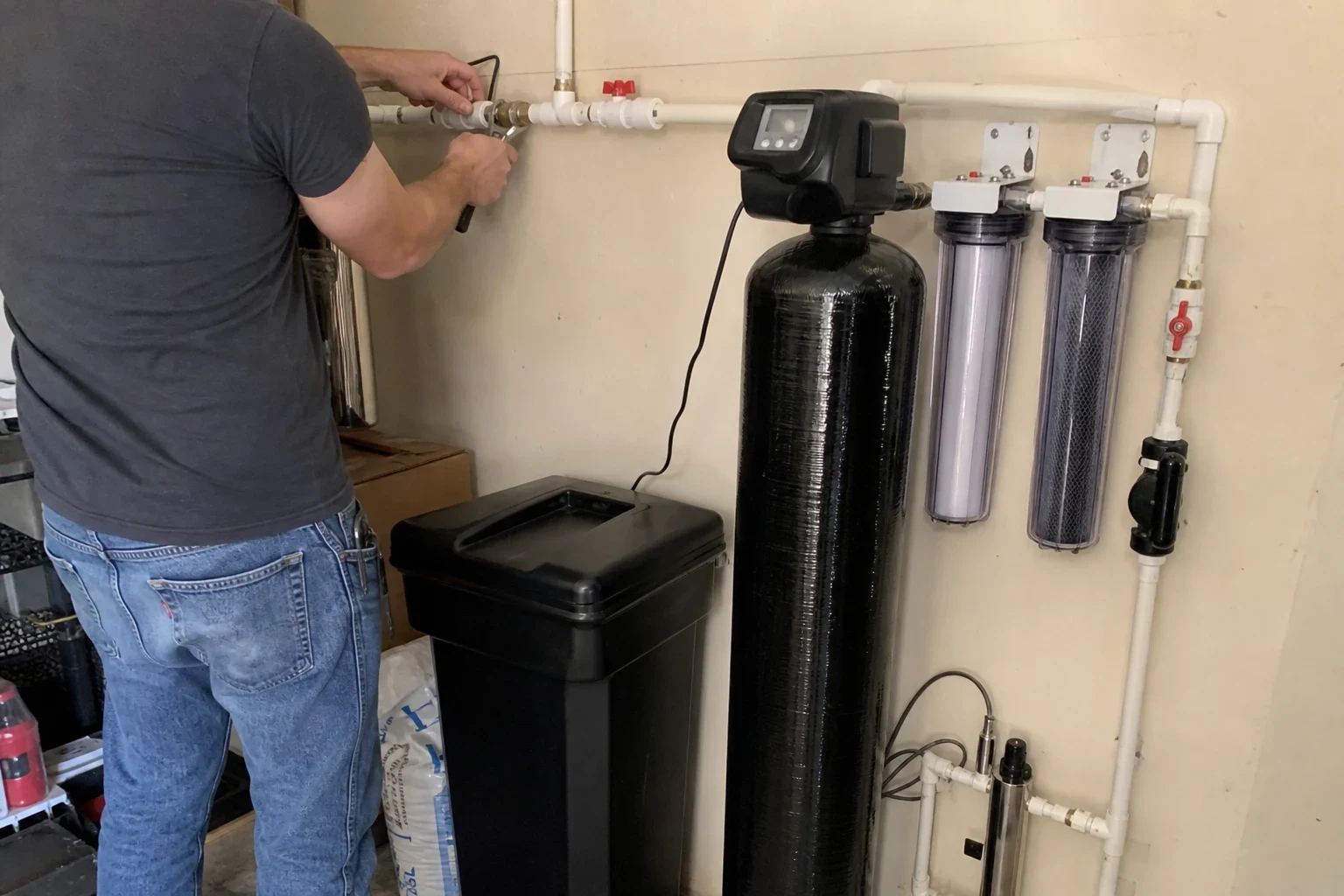
What a Reverse Osmosis System Does
Reverse osmosis uses household water pressure to force water through a thin-film composite membrane with pores far smaller than a dissolved salt molecule. Clean water, called permeate, passes through and collects in a small pressurized tank. Rejected minerals and contaminants are rinsed to the drain. The result is water with a much lower total dissolved solids reading, a clean taste and no chlorine smell.
Reverse osmosis works at a single point of use. Most installs serve the kitchen sink, and many also feed a refrigerator or ice maker. Choose it when the water you drink and cook with is the concern. For treated water at every shower and faucet, see our Whole-Home Filtration page; the two systems pair well.
Timing matters more than most people expect. A membrane is rated at about 77 degrees, and colder winter tap water slows production noticeably. We size the tank and check your pressure with the coldest months in mind, so the system still keeps up when summer heat has everyone drinking more.
What Your Installation Includes
- Sediment and carbon prefilters
- A sediment cartridge catches rust and grit first. A carbon block then removes chlorine and chloramine, which would otherwise break down the membrane over time.
- Thin-film composite membrane
- This is the part that does the real separation. We match the membrane's daily rating to your household size so the tank refills fast enough between uses.
- Storage tank and polishing filter
- A bladder tank holds treated water under pressure so the faucet flows at a usable rate. A final carbon filter after the tank polishes taste just before the water reaches your glass.
- Dedicated faucet and drain line
- The faucet usually goes into an unused sprayer or soap dispenser opening, and we drill the counter only when there is no spare hole. Wastewater leaves through a drain saddle clamped above the P-trap, with a check valve so nothing backs up into the system.
- Optional fridge or ice maker hookup
- We can extend a quarter-inch tube from the RO unit to the water inlet on your refrigerator, so the dispenser and ice tray draw on treated water too. Cubes typically come out clearer, without the cloudy core or stale flavor.
Signs an RO System Fits Your Kitchen
You buy bottled water every week
Cases of bottled water add up in cost and in trips to the store. An RO faucet gives you comparable water at the sink.
Coffee and tea taste off
Chlorine compounds and high dissolved minerals flatten the flavor of anything you brew. RO removes both.
White crust in the kettle
Scale in kettles and coffee makers comes from dissolved calcium and magnesium. RO water leaves far less behind on heating elements.
Cloudy or odd-tasting ice
Ice concentrates whatever is in the water. A dedicated line from the RO system usually fixes it.
Older plumbing in your home
Homes built before the mid-1980s may have lead solder at pipe joints. An RO membrane is one of the more effective ways to reduce lead at the drinking tap.
A high reading on your water report
If your water report shows a high total dissolved solids number, RO is the most direct way to bring it down at the drinking tap.
How the Job Runs
- 1
Start with a phone call
Tell us what you notice in your water, whether that is taste, scale or older pipes, and how many people drink from the kitchen tap. We give you a quote, and we can arrange a water test so the recommendation is based on your readings.
- 2
Check pressure and space
At your home we measure incoming water pressure, since most membranes want at least 40 to 50 psi to work efficiently. We also confirm the cabinet has room for the tank and filter housings.
- 3
Install under the sink
We tap the cold line with a feed valve, mount the filter assembly, set the tank, connect the drain saddle and install the faucet. Most installs take part of a morning, and the water stays on everywhere else in your home.
- 4
Flush, test and clean up
New carbon and membranes need flushing, so we run the first tanks to drain. We check every fitting for leaks, show you the shutoff valve, and leave the cabinet and counter clean.
- 5
Set your filter schedule
We write down when each filter is due. Many owners pair changes with the start of summer and winter, so the system is fresh before the heaviest and slowest seasons.
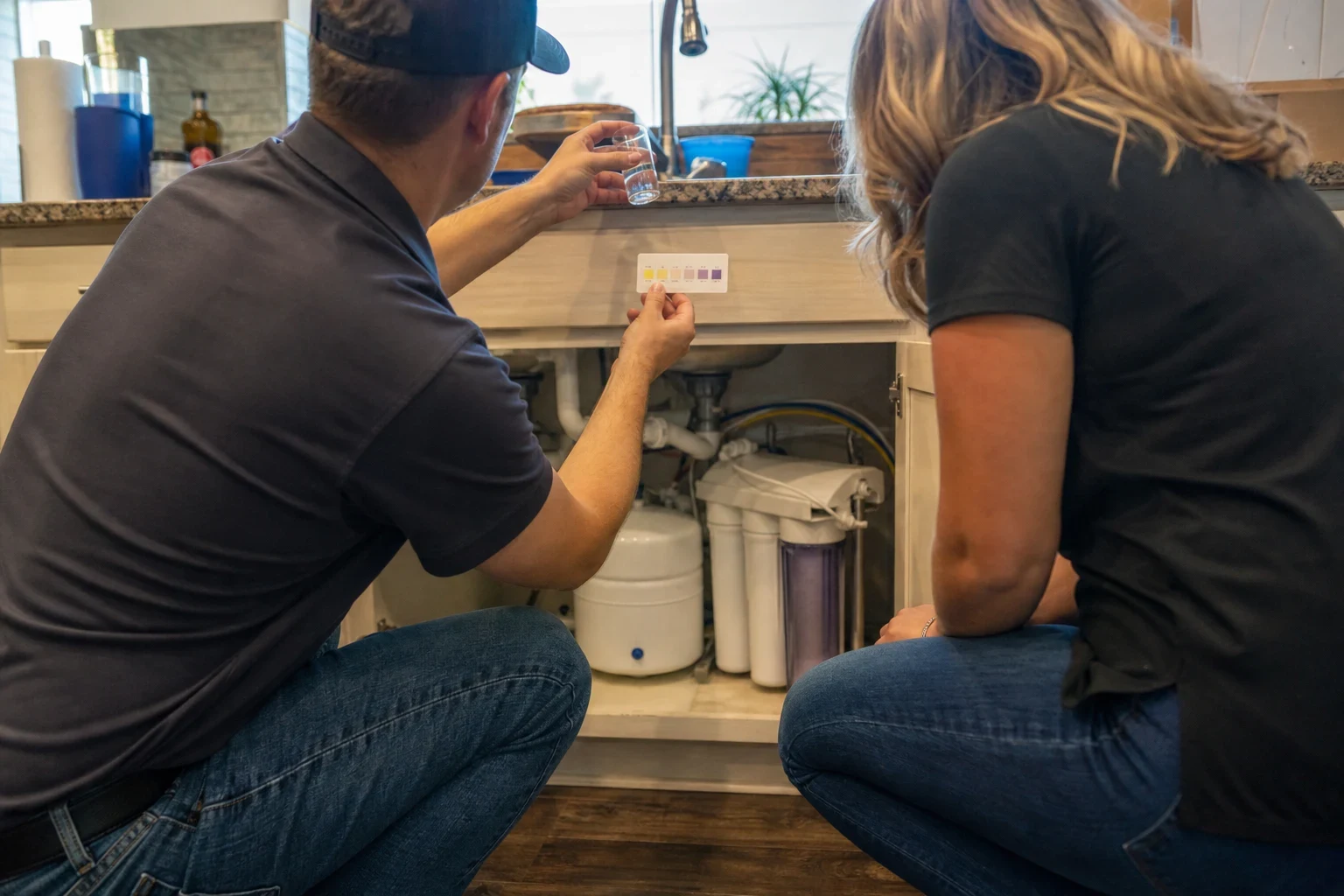
What Your RO Price Depends On
An RO quote rests on two things: the equipment you pick and the amount of work your kitchen calls for. We go over each line with you before we order anything. Standard professional installation is included for qualifying homes.
- How the system is built
- A simple tank unit is less expensive than a higher-flow tankless one. A remineralization stage or a permeate pump adds to the equipment price, though it can make the water taste better and reduce wastewater.
- Incoming pressure
- When pressure is on the low side, the membrane may need a booster pump to make enough water. We take a measurement before suggesting one.
- What your counter is made of
- An open sprayer hole makes the faucet a fast job. Granite and quartz call for a diamond core bit and slow, steady drilling, which takes longer.
- Additional tubing runs
- Feeding a refrigerator or ice maker means more parts and more labor, more so when the fridge stands on the far side of the kitchen from the sink.
Reverse Osmosis Questions
Something not covered here? (972) 640-9748
How much water goes down the drain with RO?
A membrane needs a steady rinse flow to carry rejected minerals away, so part of the incoming water always exits through the drain line. Older units could discard several gallons for each gallon of drinking water. Current membranes and permeate pumps bring that ratio down sharply, and we compare those options with you when we put your quote together.
Will RO water taste flat?
Some people notice RO water tastes very clean, almost flat, because the minerals are gone. A remineralization cartridge adds a small amount of calcium and magnesium back for a rounder taste. It is optional.
How often do the filters need changing?
Plan on replacing the sediment, carbon and polishing cartridges every 6 to 12 months, depending on how much water you draw. A membrane generally runs two to three years before it needs replacing. If the faucet slows or the taste shifts, something is due.
Why does the system fill slower in winter?
Membranes produce less water when the incoming water is cold. In the cooler months your tank simply takes longer to refill. We account for that when sizing so you are not left waiting at the sink.
Do I still need whole-home filtration or a softener?
RO only treats the one tap it feeds. If chlorine in the shower or scale on fixtures bothers you, look at our Whole-Home Filtration or Water Softeners pages. A softener ahead of the RO system can also extend membrane life in harder water.
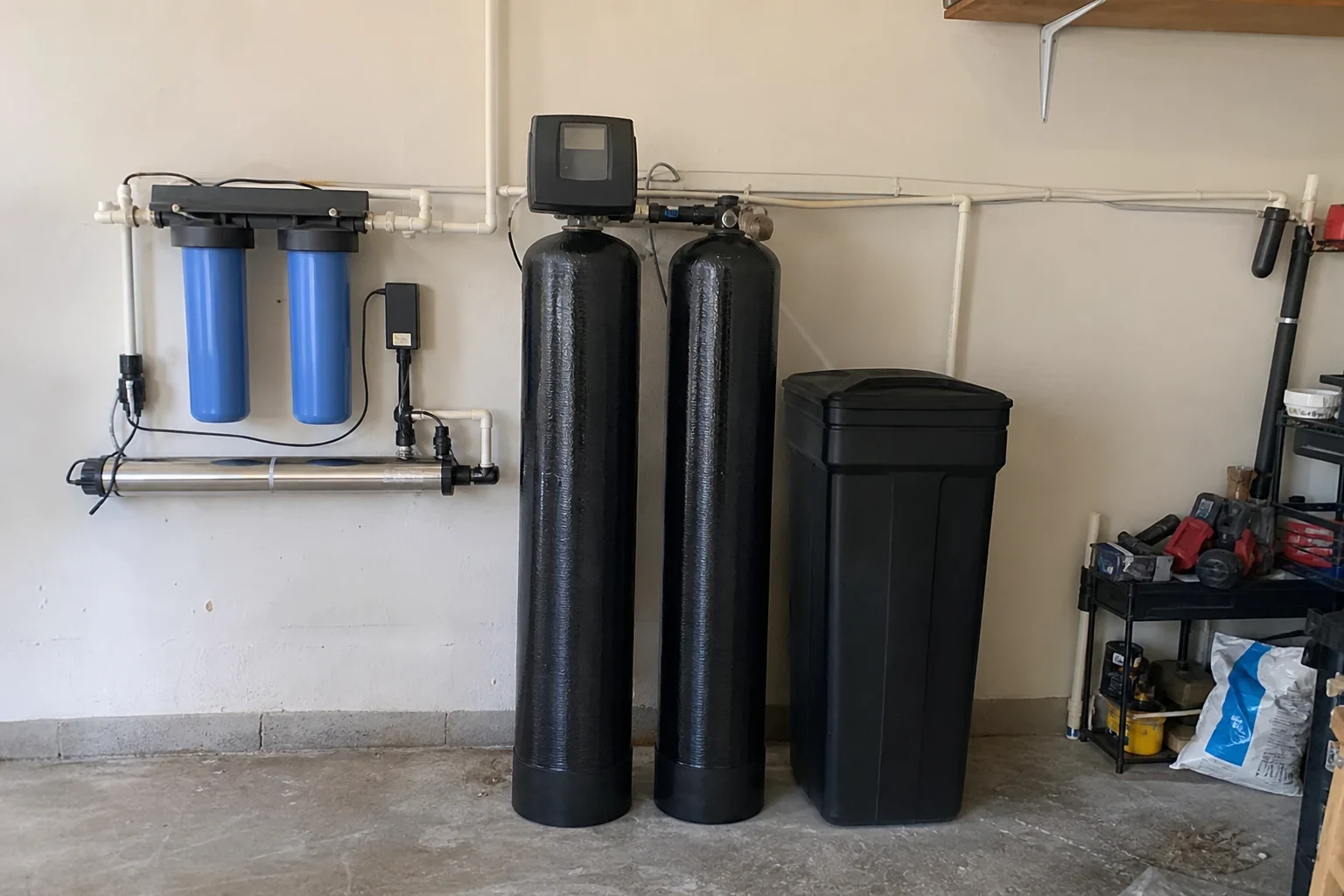
Get Cleaner Water at Your Kitchen Tap
Describe your kitchen and how your family uses its water. You will get a straightforward quote and a filter schedule planned around the seasons.