ServicesUV Water Treatment
Carrollton UV Water Treatment
With a UV system, all the water coming into your house flows past a germicidal lamp that stops bacteria, viruses and cysts from reproducing. We match the chamber to your flow, fit the pre-filter it calls for and get it working before seasonal weather strains your supply.
What UV treatment does and when it makes sense
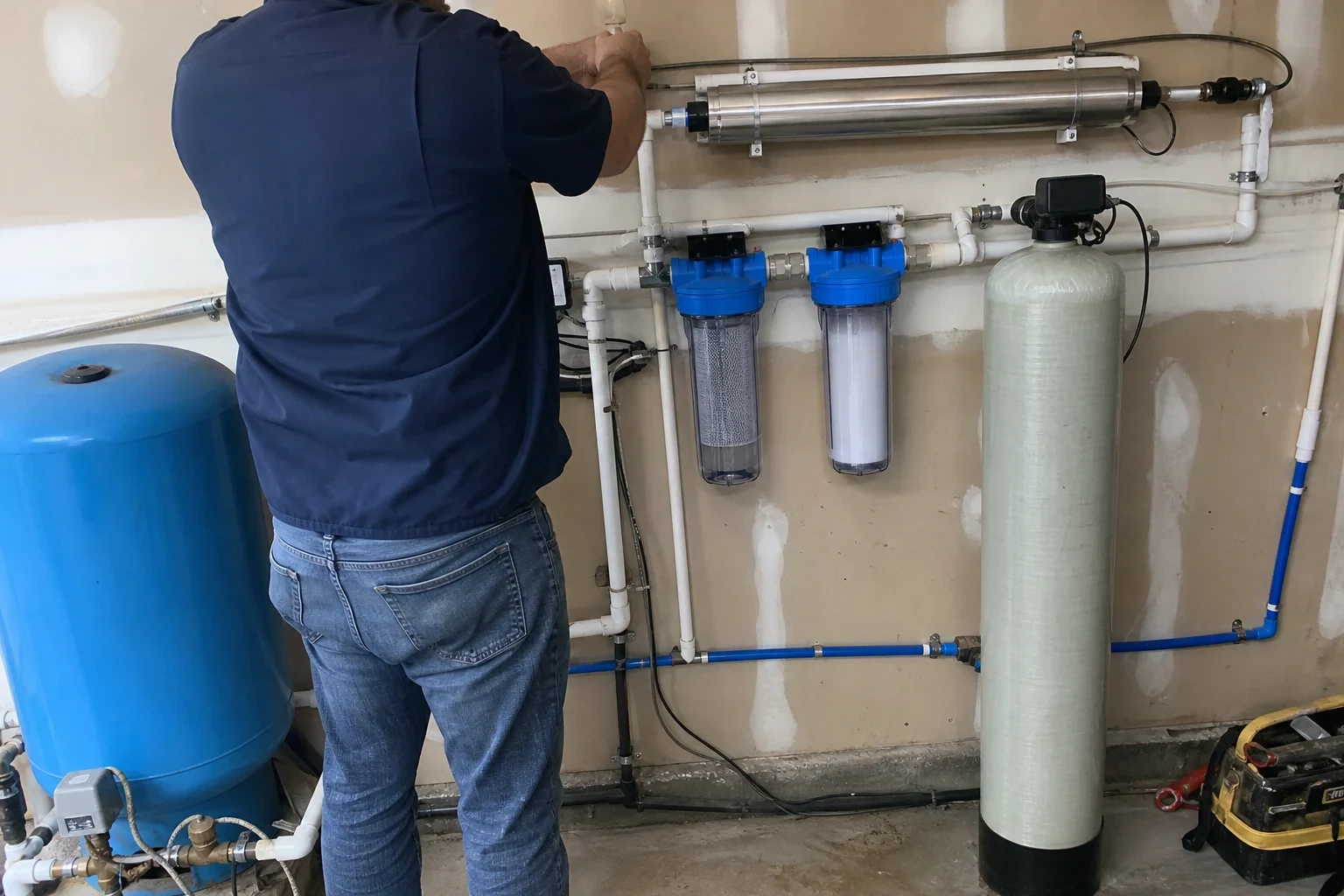
At the center is a lamp inside a quartz sleeve, set in a steel reactor that every gallon of incoming water passes through. It emits ultraviolet light at 254 nanometers, which damages the DNA of bacteria, viruses and cysts so they can no longer multiply or make anyone sick. Nothing is added to the water, and it tastes and smells just as it did.
Because Carrollton homes already get treated city water, UV works as an extra layer on top of the utility's treatment rather than a substitute for it. It makes sense when someone in the house would be hit harder than most by a stray microbe, or for owners who want protection ready before a hard freeze or a main break. When it does not suit your home, we tell you.
UV deals with living microbes and nothing else. Chlorine, lead, hardness and sediment pass right by it, so we normally install it alongside whole-home filtration or reverse osmosis rather than on its own.
What comes with a UV install
- 01
A chamber matched to peak flow
Counting your bathrooms and fixtures gives us your peak gallons per minute, and we pick a unit rated for a full dose at that rate. Too small a chamber sends water past the lamp faster than the light can act on it.
- 02
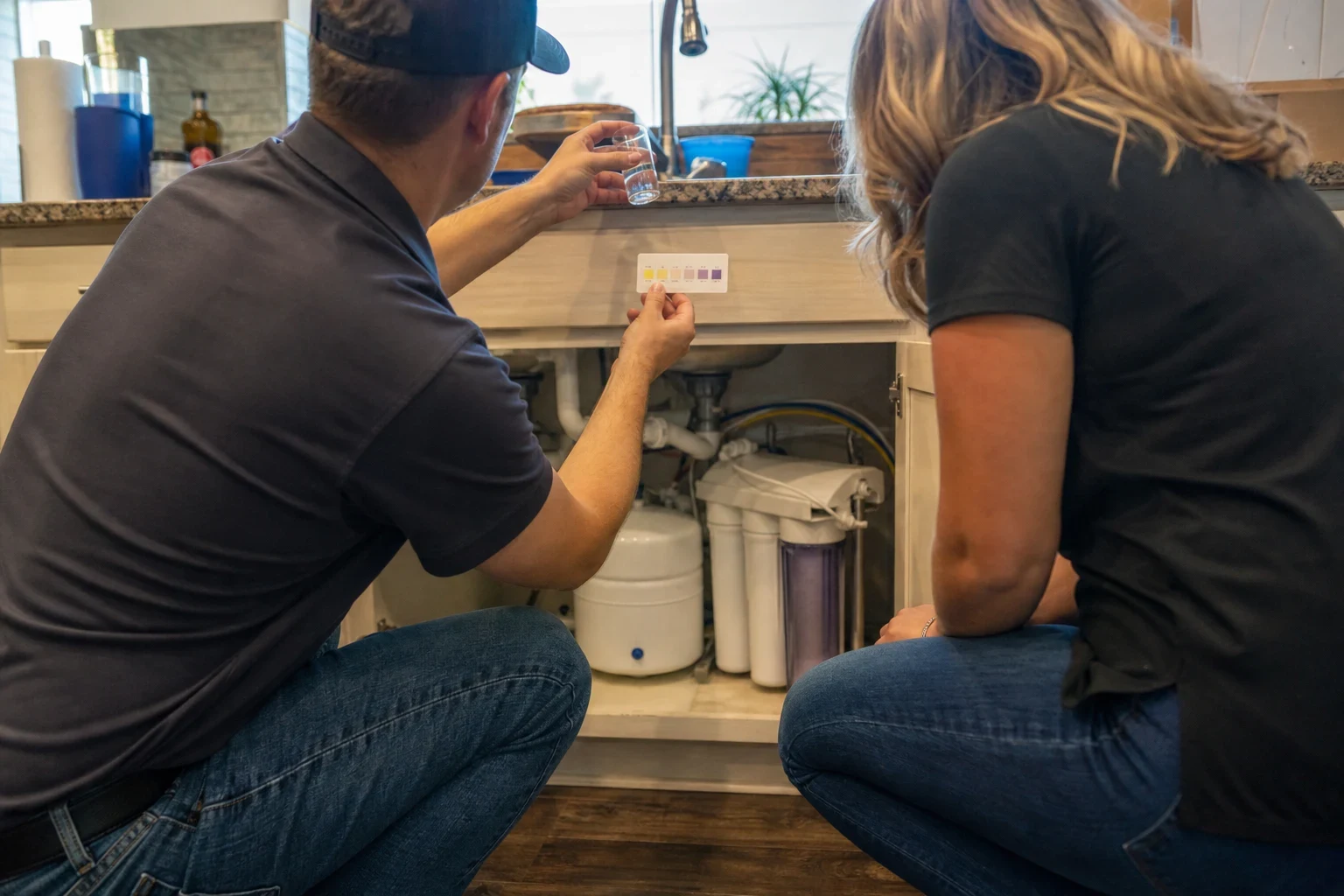
Sediment filter ahead of the lamp
We put a 5-micron sediment cartridge before the lamp. Particles can hide microbes in their shadow, so clear water is a working part of UV treatment rather than an extra.
- 03
The right spot in your plumbing
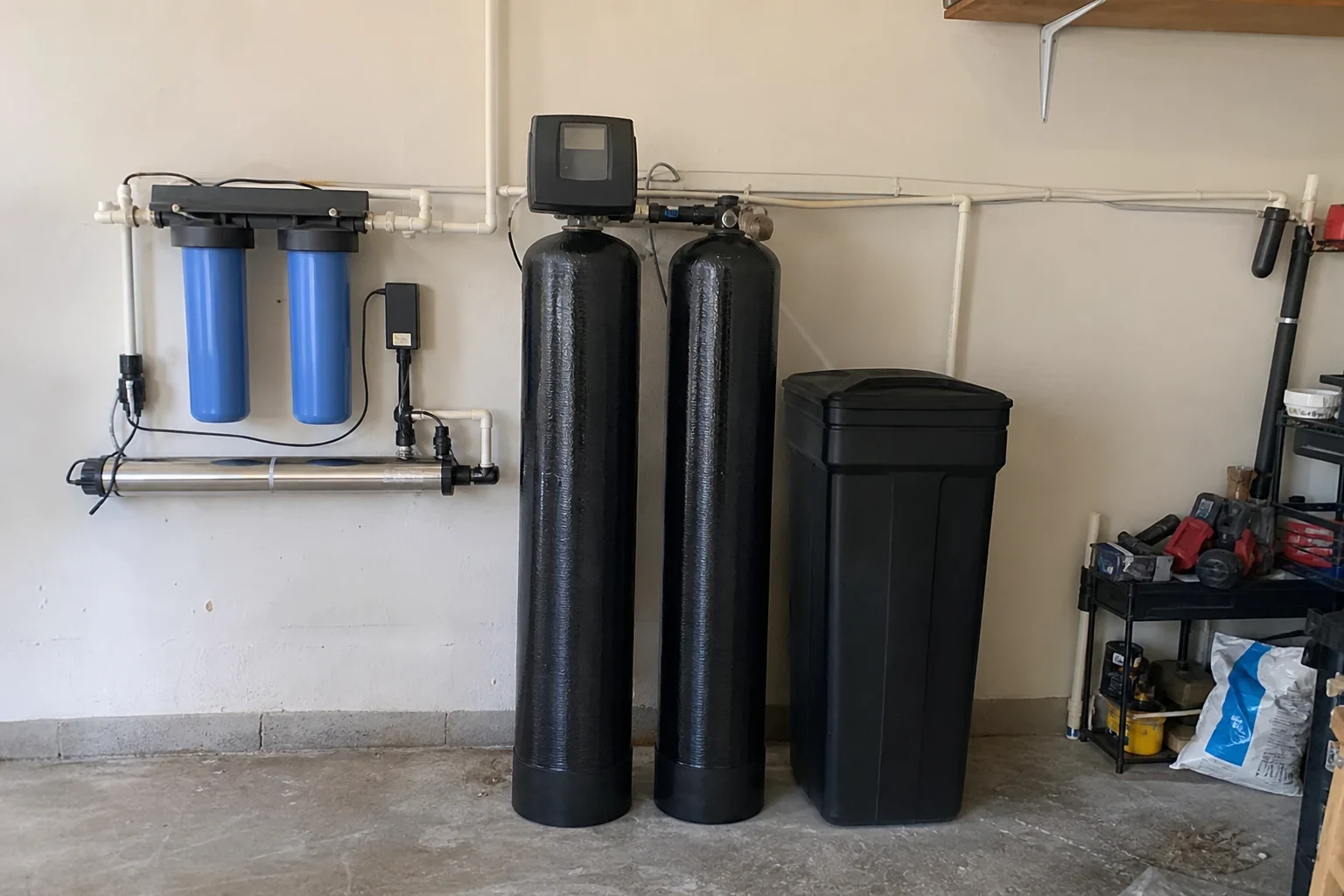
When a softener or carbon filter is already there or going in, the UV unit sits after them, nearest the house. Water that is already softened and filtered keeps the quartz sleeve clearer so more light gets through.
- 04
Power supply and alarm
The ballast powers the lamp. We mount it on the wall next to a grounded outlet, where its display shows remaining lamp life and an alarm sounds if the lamp goes out. Certain models can also take a sensor that measures real light output through the sleeve and warns you as it drops.
- 05
Bypass valves and clean lines
Three valves let water flow around the unit, so changing a lamp never shuts off water to the whole house. We also sanitize the pipes past the unit before switching the lamp on, so treatment begins in clean lines.
Questions about UV Water Treatment?
Call(972) 640-9748Signs UV treatment belongs on your list
Someone at home is medically vulnerable
A newborn, a person in chemotherapy or an older parent has less margin for a waterborne illness. UV adds a barrier where water enters without changing how it tastes.
Boil-water notices make you uneasy
Line pressure can drop after a winter freeze or a main break, and the utility may advise boiling until it confirms the water is safe. We still recommend following any notice. UV adds a layer for water already moving through your pipes.
You already filter out chlorine
A carbon filter removes the city's disinfectant along with its taste. Adding UV after the carbon tank covers microbes once that residual is gone.
Your UV lamp is past a year old
Lamps keep glowing long after their germicidal output fades, typically around 9,000 hours. If yours has not been changed in that time, the blue light you see is not doing the job.
How install day runs
- 1
Quote by phone, then a look at your plumbing
On the call we talk through your home, who drinks the water and what you want covered, and give you a quote. At the visit we check your main line size, where water enters, and whether there is power and service room for the chamber.
- 2
Water off, system in
We shut off the main, cut in the bypass and pre-filter, then mount the chamber in the orientation the maker specifies. Most installs take part of a day, with your water off for a short stretch in the middle.
- 3
Line sanitizing and checks
We sanitize the downstream plumbing so bacteria already in the pipes are cleared, check every fitting for leaks and confirm the controller reads normal.
- 4
Walkthrough and cleanup
You see where the lamp and sleeve sit, what the alarm sounds like and how to use the bypass. We haul off packaging and wipe down the work area before we leave.
What sets the cost of a UV system
The total comes from the equipment your flow requires and the labor to fit it into your plumbing. Every part and every labor task is listed on its own line, so you can weigh one chamber size or feature against another. Standard professional installation is included for qualifying homes, and many homes qualify.
- Chamber size for your flow
- A house where three or four bathrooms may be in use together calls for a bigger chamber and lamp than a two-bath home.
- Treatment ahead of the UV
- When sediment or hardness would coat the quartz sleeve, a softener or extra filtration may have to go in ahead of it, which raises the total.
- Reaching the main line
- A supply line on an open garage wall makes for a quicker job. One in a tight utility closet or behind drywall takes longer, and when there is no outlet close to the unit, putting one in adds electrical work.
- Alarms and sensors
- Entry-level units keep track of lamp life. Units with an intensity sensor, or a solenoid valve that shuts off flow if the lamp fails, cost more and warn you sooner.
UV water treatment questions
Does UV replace the chlorine the city adds?
No. The city's disinfectant stays in your water unless a carbon filter takes it out. UV treats water at one point as it passes the lamp and leaves nothing behind in the pipes, so the two work together.
Will UV make my water taste better?
It will not change taste, odor or clarity. If chlorine taste bothers you, look at whole-home filtration or an under-sink reverse osmosis system, then add UV after them if you also want microbial protection.
How often does the lamp need changing?
Plan on once a year. Many owners swap it in spring, before summer heat warms the water sitting in household lines, and clean the quartz sleeve at the same time. We can handle that visit or show you how to do it yourself.
Does a UV system use much electricity?
A residential lamp draws roughly what a household light bulb does. It stays on continuously because a cold lamp needs a few minutes to reach full output, and switching it on and off shortens its life.
What happens if the power goes out?
The lamp stops, so untreated water can pass. When power returns, give the lamp a few minutes and run your taps briefly before drinking. Units with a solenoid valve hold back flow until the lamp is ready.
Get UV protection in place before summer
Tell us about your home and who drinks the water, and we will quote the right size system over the phone. If you are still weighing UV against filtration or reverse osmosis, we can walk through how they fit together on the same call.