ServicesWhole-Home Filtration
Whole-Home Filtration in Carrollton, Sized to Your Plumbing
We install point-of-entry carbon filtration on the main line, so the shower, kitchen tap and washing machine all get the same treated water. Each system is matched to your home's flow rate and plumbing layout, and set up ahead of the season when your water use climbs.
What a Whole-Home Filter Does
City water is safe to drink, but it reaches you carrying the disinfectant the utility adds to keep it clean in the pipes. Many North Texas systems use chloramine, which forms when ammonia is paired with chlorine. It stays active longer in the mains, and it resists the quick removal that plain chlorine allows. That is the swimming-pool smell in a hot shower and the flat taste in a glass of tap water.
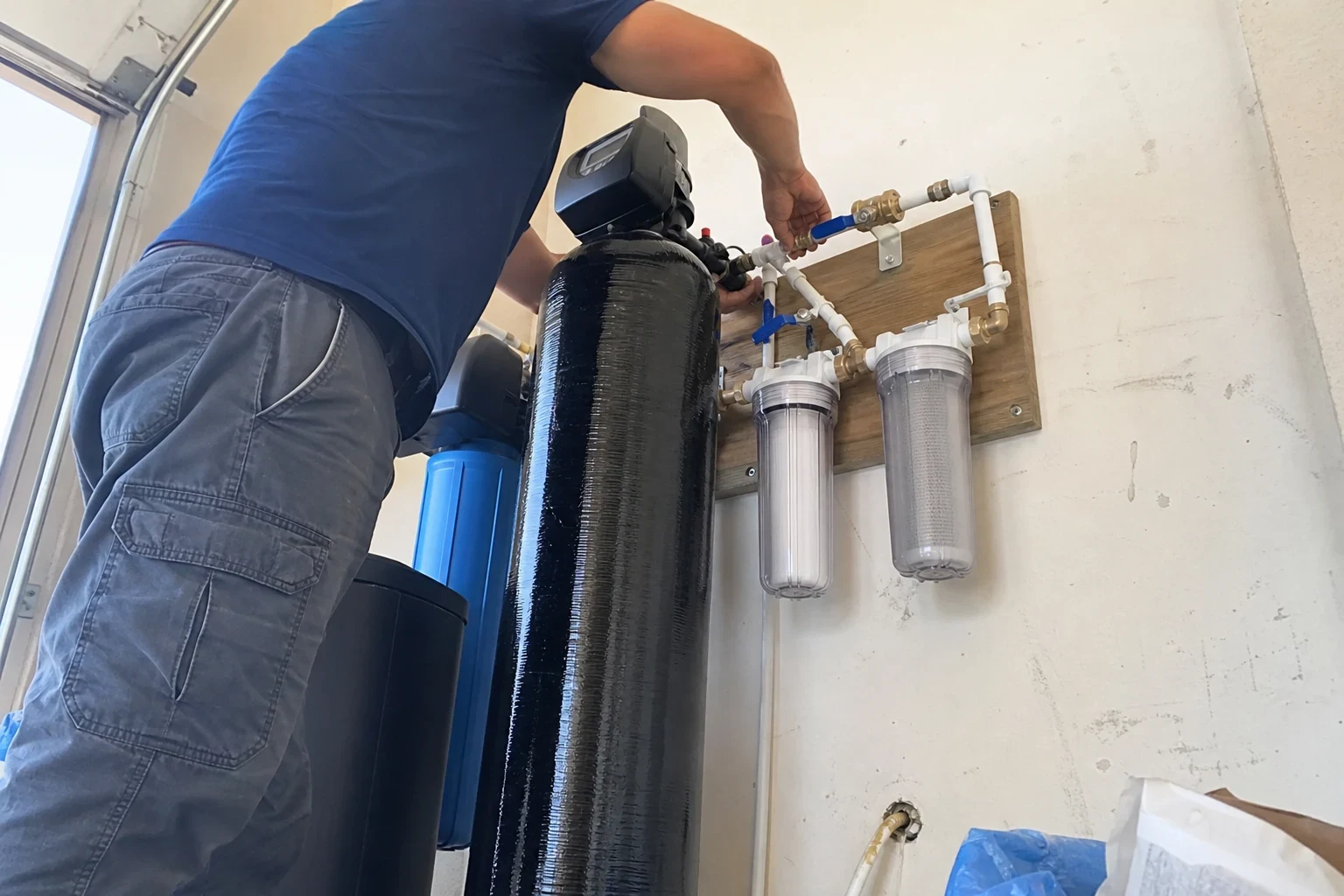
We plumb the system into the main supply just downstream of your shutoff valve, before the line splits off to any fixture. In a typical Carrollton house that puts it on a garage wall or beside the water heater closet. Water runs through a sediment prefilter, then a bed of catalytic carbon that breaks down chloramine instead of just holding it. Every outlet after that point, including the ice maker and the dishwasher, draws filtered water.
It is the right call when the taste and smell bother you at more than one tap. If your only concern is drinking water, our reverse osmosis page covers a smaller, under-sink option.
What the Installation Includes
- Sediment prefilter
- A 5-micron cartridge catches sand, pipe scale and grit before it reaches the carbon. This keeps the main media from clogging early and protects fixture aerators.
- Catalytic carbon stage
- Standard carbon handles chlorine well but struggles with chloramine. Catalytic carbon has a modified surface that speeds the reaction, so it keeps working at full household flow.
- Bypass and shutoff valves
- We fit a three-valve bypass so you can keep water running while a cartridge is changed. Isolation valves on both sides make service a quick, dry job.
- Pressure gauges
- Gauges before and after the filter show the pressure drop across it. When that gap widens, the prefilter is loading up and you can see it before you feel it in the shower.
- Freeze protection where needed
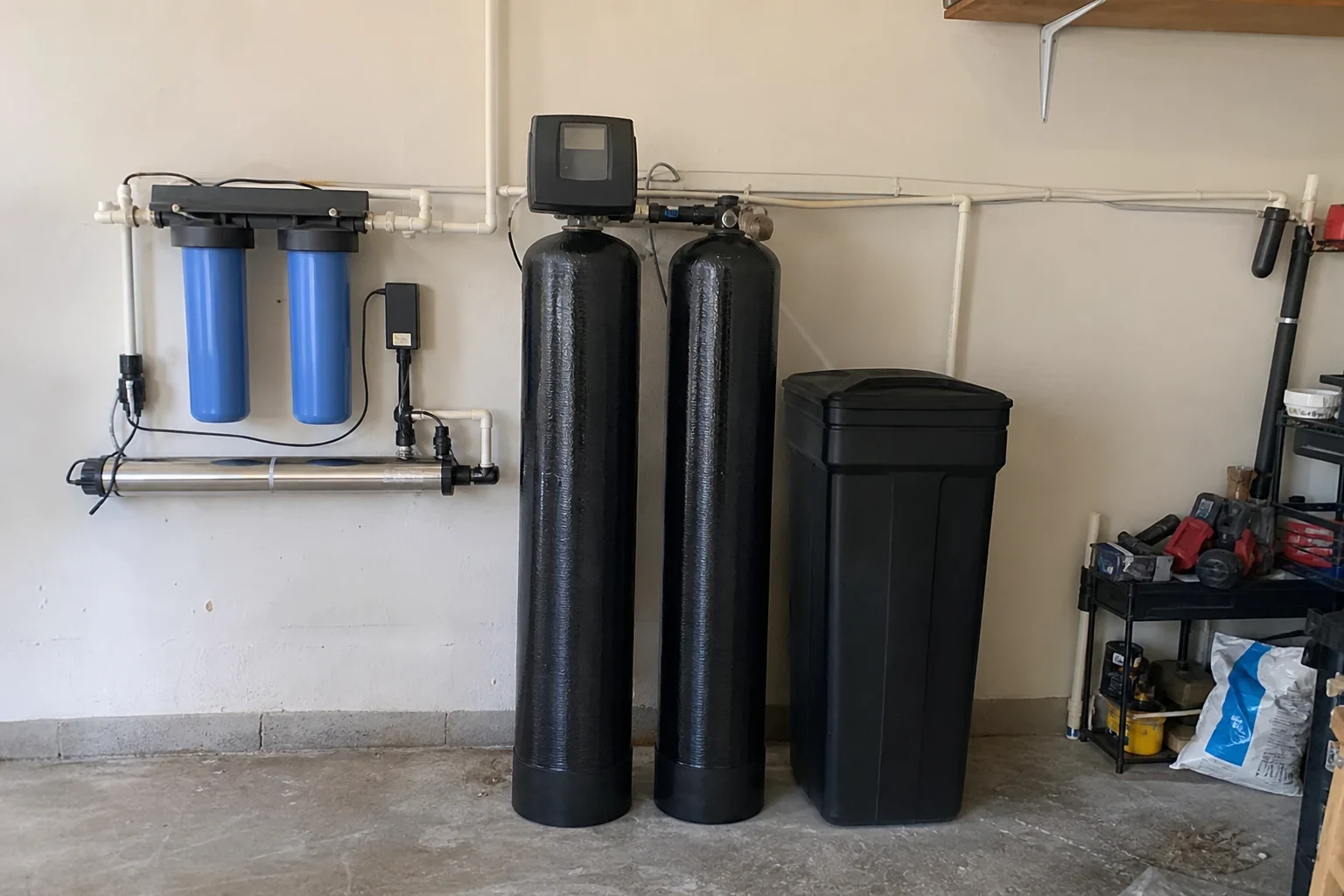
- A system in an unheated garage gets insulation on the housings and exposed pipe. A hard freeze can crack a filter housing just like a pipe.
Clues That Point to Whole-Home Filtration
Showers that smell like chemicals
In a closed bathroom, hot water drives chloramine into the air. When the odor is worst at the shower, the water coming in has not been treated.
Water that tastes different by season
Water drawn from lakes and reservoirs often picks up an earthy taste in late summer and fall as conditions in the lake change. Carbon captures those taste and odor compounds as well as the disinfectant.
Tight skin and dry hair
Some people find their skin feels tight once they step out of the shower. Taking the disinfectant out where water enters the house is a frequent reason families pick whole-home treatment over a filter on one tap.
Sand in faucet screens and showerheads
Grains of sand or bits of scale stuck in faucet screens show that sediment is moving through your plumbing. A prefilter stops it before it reaches valves and appliances.
A filter at every tap
A pitcher filter, a refrigerator filter and a shower filter all call for separate cartridges. A single system on the main line takes the place of all of them.
How the Job Runs
- 1
Water test and plumbing look
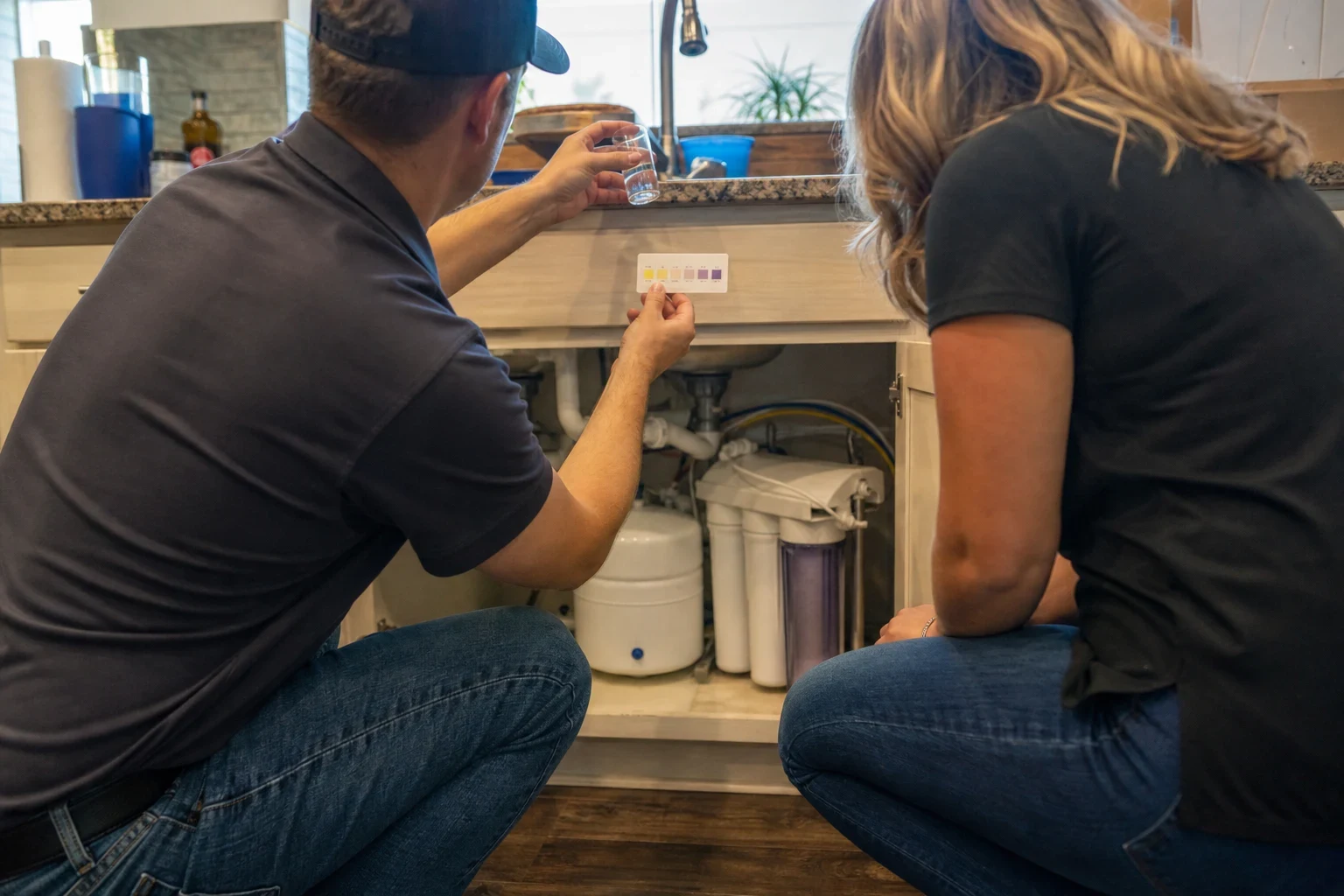
We test your tap water and check where the main line comes in, its pipe size and material, and the space around it. You get a written water report so you can see what the system would actually address.
- 2
Quote on the right system
We size by peak flow, which depends on bathrooms and fixtures, not square footage. You get a quote that lists the housings, media, valves and any plumbing changes.
- 3
Installation day
We shut off the main, cut into the line, and install the bypass, prefilter and carbon stage. Then we restore water, purge air and carbon fines, and check every joint for leaks under pressure. When the city calls for a permit on this kind of plumbing work, we handle the paperwork.
- 4
Seasonal service plan
Before we leave, we mark the cartridge change dates and explain how to read the gauges. Many owners time changes to spring, ahead of summer water use, and fall, before freezes.
What Moves the Price
Most of the cost comes from the system type and how much plumbing it takes to put it in. Standard professional installation is included for qualifying homes. Your quote spells out anything beyond that, so the number does not change on the day.
- Cartridge or media tank
- Large cartridge housings cost less up front and need periodic changes. A backwashing media tank holds more carbon and lasts longer, but needs a drain and an electrical outlet nearby.
- Flow rate and home size
- When four bathrooms can run at the same time, the system needs more filter capacity, either through bigger housings or a larger tank, so pressure holds steady. Undersizing is the most common mistake we see in existing systems.
- Location and access
- A main line exposed in the garage is straightforward. A line buried in a wall or slab may need rerouting to reach a usable spot.
- Freeze protection and add-ons
- Insulation for a garage install, a new drain line or an outlet for a media tank each add materials and time.
Whole-Home Filtration Questions
Something not covered here? (972) 640-9748
Will a whole-home filter remove chloramine?
Yes, if it uses catalytic carbon with enough contact time. Ordinary carbon removes chlorine quickly but chloramine slowly, so a standard filter can let it through at high flow. We size the media bed for your peak demand so the water spends long enough in it.
Will my water pressure drop?
A correctly sized system causes only a small drop you will not notice in normal use. Noticeable loss usually means the housings are too small or the prefilter is clogged. The gauges we install show you which.
How often do the filters need changing?
Sediment prefilters typically need changing every few months, depending on how much grit is in the line. Carbon lasts much longer, and a media tank longer still. We set a schedule based on your household's actual usage.
Do I also need a water softener?
Not always. Carbon does not remove the calcium and magnesium that cause hardness, so if you see scale on fixtures, a softener can sit alongside the filter. We cover that on our water softeners page and will tell you plainly if it is not needed.
Where in my home does the system go?
We tie it into the main line just past your shutoff valve, ahead of the water heater, so both hot and cold water come out treated. For a lot of houses that spot is on a garage wall. If the garage is unheated, we insulate the system against winter freezes.
Have Your System In Before Summer Use Peaks
Tell us about your home and the taste or smell that bothers you. We will set up a water test, look at your main line and quote a system sized for your plumbing.