ServicesWater Softeners
Water Softeners in Carrollton, Sized for Your Home
We install ion-exchange water softeners that stop scale on fixtures, glassware and inside your water heater. Each system is sized from a hardness reading at your tap and how much water your home uses, then set up before the summer months when scale builds fastest.
How Softening Works and When It Is Worth It
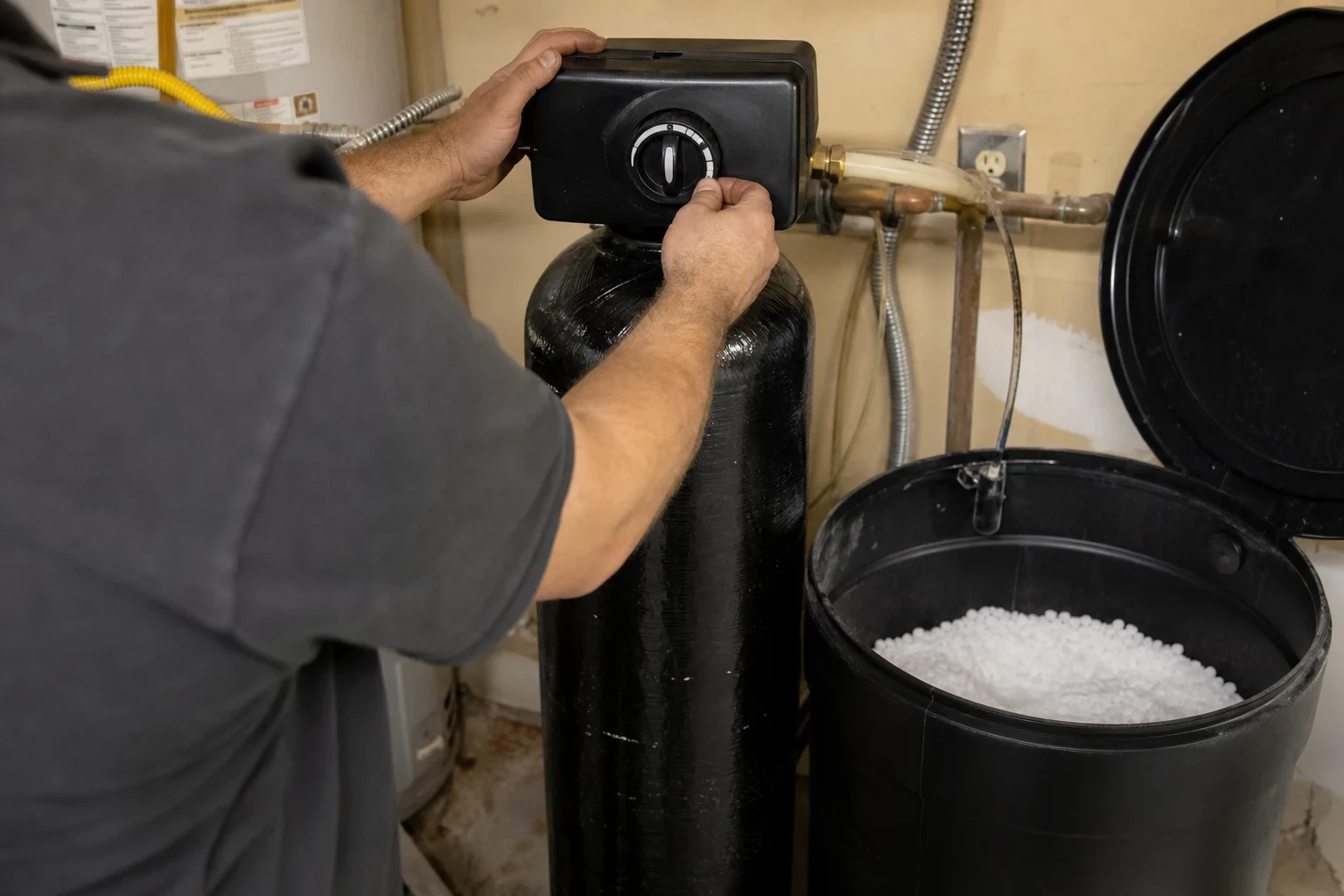
Hard water holds dissolved calcium and magnesium. As it dries on a fixture or heats in a tank, those minerals come out as chalky buildup, a cloudy film on glassware and a hard layer at the bottom of the water heater. A softener removes them first through ion exchange. Water passes through a tank of resin beads charged with sodium or potassium ions, and the beads swap those ions for the hardness minerals. Once the beads are saturated, the control valve begins a regeneration: brine from the salt tank washes through the resin, pulls the minerals free and flushes them down the drain line.
Softening addresses hardness and nothing more. Chlorine, chloramine, lead and off tastes call for whole-home filtration or reverse osmosis instead. That is why we read the hardness at your tap before anything else and size the softener from that result. When the number does not support a softener, you will hear that from us.
When you install matters as well. Heat speeds up scale, and a Carrollton summer brings more showers, more laundry and more dishes. A spring install gives the system time to settle before the busiest months arrive.
What Goes Into a Softener Install
- 01
Sizing by grain capacity
We multiply your hardness reading by your household's daily gallons and the days we want between regenerations. That gives the grain capacity the resin tank needs. An undersized tank regenerates too often and burns salt, and an oversized one can let resin sit stagnant.
- 02
Metered control valve
We use demand-initiated valves that count gallons instead of running on a calendar. The softener regenerates when the resin is actually used up, so it saves salt and water in slow weeks and keeps up when you have guests.
- 03
Bypass valve and plumbing tie-in
Every install gets a bypass so you can shut the softener off for service without cutting water to the house. We connect to an existing softener loop where your home has one, or cut into the main line where it doesn't. Where the plumbing allows, outdoor hose bibs stay on unsoftened water so you are not paying to soften lawn water.
- 04
Drain line with an air gap
Brine discharge runs to an approved drain point through an air gap. The gap keeps wastewater from siphoning back into the softener if the drain ever backs up.
- 05
Salt choice and brine tank setup
We fill the brine tank and set the valve for either sodium chloride or potassium chloride. Potassium costs more per bag but adds no sodium to the water.
- 06
Carbon prefilter where it helps
Chloramine in treated city water can slowly break down softener resin. Where that applies, we can add a carbon stage ahead of the softener to protect the beads and take out the chlorine taste.
Questions about Water Softeners?
Call(972) 640-9748Clues That Point to a Softener
Chalky buildup on faucets
The white rings at the base of a faucet and the blocked holes in a showerhead are calcium carbonate left over after water dries.
Glasses that come out hazy
Spots that return after each dishwasher run are a film of minerals. Rinse aid covers it up, but the minerals stay.
Popping or rumbling from the water heater
Minerals settle on the bottom of the tank and trap small pockets of water under them. When the burner or element heats that water, it bursts into steam, which is the popping sound. The buildup also acts as insulation, so the heater uses more energy to make the same hot water.
Soap that barely suds
Calcium and magnesium combine with soap into a curd that will not dissolve. You use more detergent and body wash to get a lather, and a dull film stays on towels and on your skin after you shower.
A softener that is falling behind
When hard-water spots return while you keep filling the salt, look for a salt bridge, a hard shell over a hollow space in the brine tank. Bridges form more often in humid summers. Fouled resin or a worn valve can produce the same result.
From First Call to a Working System
- 1
Your call and quote
Tell us about your home, the number of people and what you are seeing. We set a time to come out and check your water and plumbing, then give you a written quote.
- 2
Hardness reading and site check
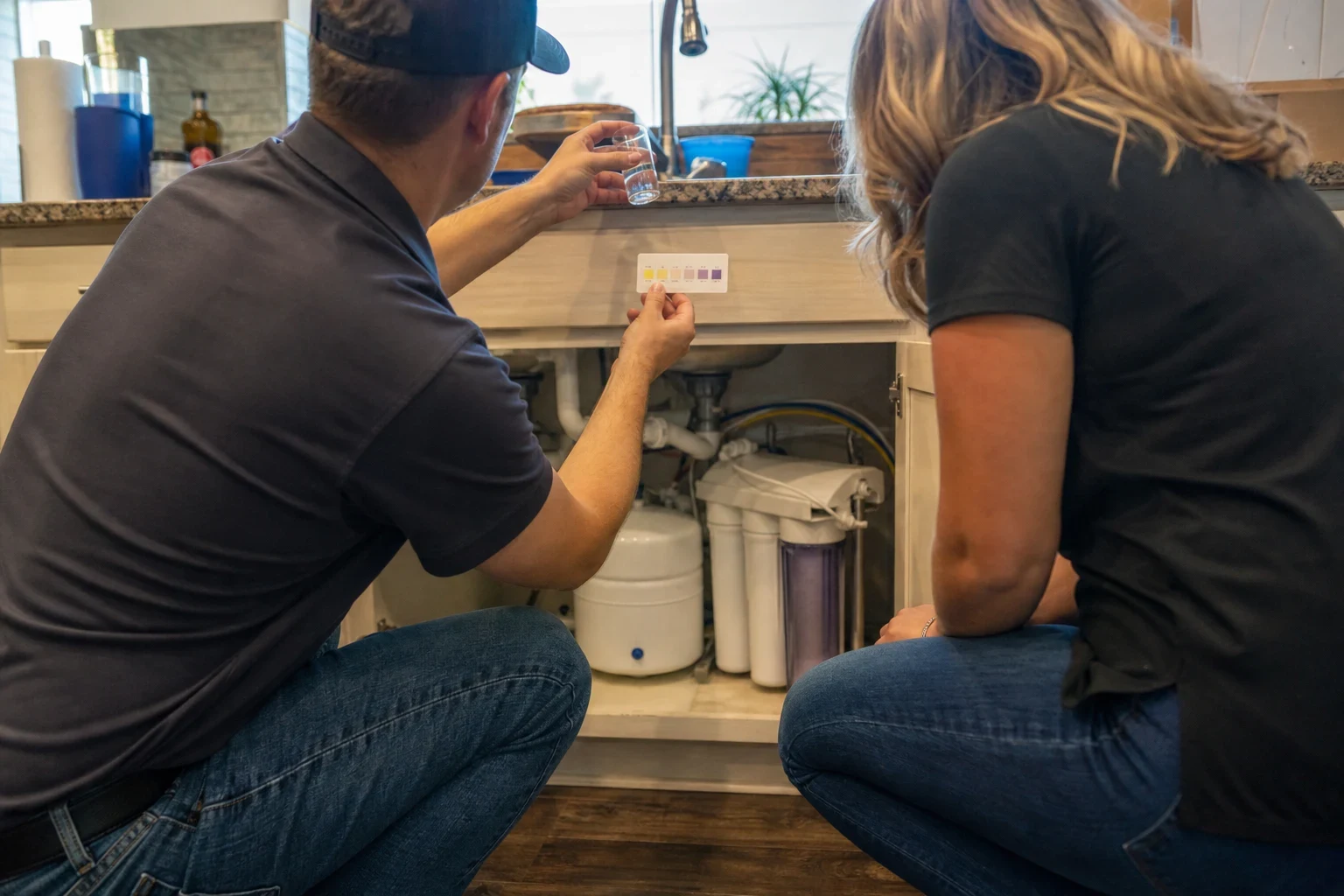
We test hardness at the tap and find where the softener will go. We look at the loop or main line, the nearest drain and an outlet for the valve, and we note anything that could change the install, such as an unfinished garage wall or a tight closet.
- 3
Install day
We shut off the main, plumb in the bypass, connect the resin tank and brine tank, and run the drain line with its air gap. We program the valve with your hardness and household size, flush the resin and check every joint for leaks under full pressure. Then we clean up the work area.
- 4
A quick lesson at the unit
Our last step is a few minutes standing at the softener with you. We cover reading the salt level, breaking up a salt bridge, switching to bypass and starting a manual regeneration. You will know what normal looks like and what to watch for as summer use picks up.
What Sets the Cost of a Softener
The price comes down to how big the system is and how much plumbing work the install needs. Equipment, plumbing parts and labor each get their own line on the written quote. Standard professional installation is included for qualifying homes, and the site check shows whether yours qualifies.
- Resin capacity
- Harder water and bigger households call for more resin. Larger resin and brine tanks cost more at the start but regenerate less often.
- Ready loop or new tie-in
- A house with a softener loop already in place is the easiest job. Tying into the main line, moving hose bibs or running a long drain line takes more labor and materials.
- Placement and freeze protection
- A softener on an outside garage wall may need pipe insulation or an enclosure for North Texas's few hard freezes each winter. Cramped closets can also add time.
- Optional carbon stage
- Adding a carbon prefilter to shield the resin from chloramine brings its own housing, media and plumbing.
- Salt over time
- Salt is not in the install price, but every softener uses it. Potassium chloride is pricier than sodium chloride, and you go through either one faster in busy summer months.
Questions About Water Softeners
Does softened water taste salty?
Most people can't tell. The resin swaps each hardness mineral it removes for a small amount of sodium, so the harder your water starts, the more sodium it carries afterward. To avoid that, we can set the softener up for potassium chloride. Plenty of homes also put reverse osmosis at the kitchen sink for drinking and cooking.
How often do I need to add salt?
That comes down to your hardness, how many people live in the house and the time of year. Look in the brine tank roughly once a month and keep it no less than a third full. Summer, with its higher water use, usually means more frequent refills.
Will a softener take out chlorine or other contaminants?
No. Softeners only trade out hardness minerals. Chlorine or chloramine taste and smell are a job for whole-home filtration, and reverse osmosis removes a far broader range of dissolved substances from drinking water.
Can a softener in the garage freeze?
During a hard freeze, an unheated garage can get cold enough to harm the valve or the lines. We look at the spot during the site visit and either insulate it or suggest a better location. When a freeze is forecast, it also helps to switch the system to bypass and wrap any exposed pipe.
Is a softener really necessary for my home?
Only when your hardness reading calls for one. We test at your tap before making any recommendation. If your water is soft enough that a softener would not be worth it, we tell you and steer you toward what actually solves the problem you are noticing.
Get Your Softener Running Before Summer
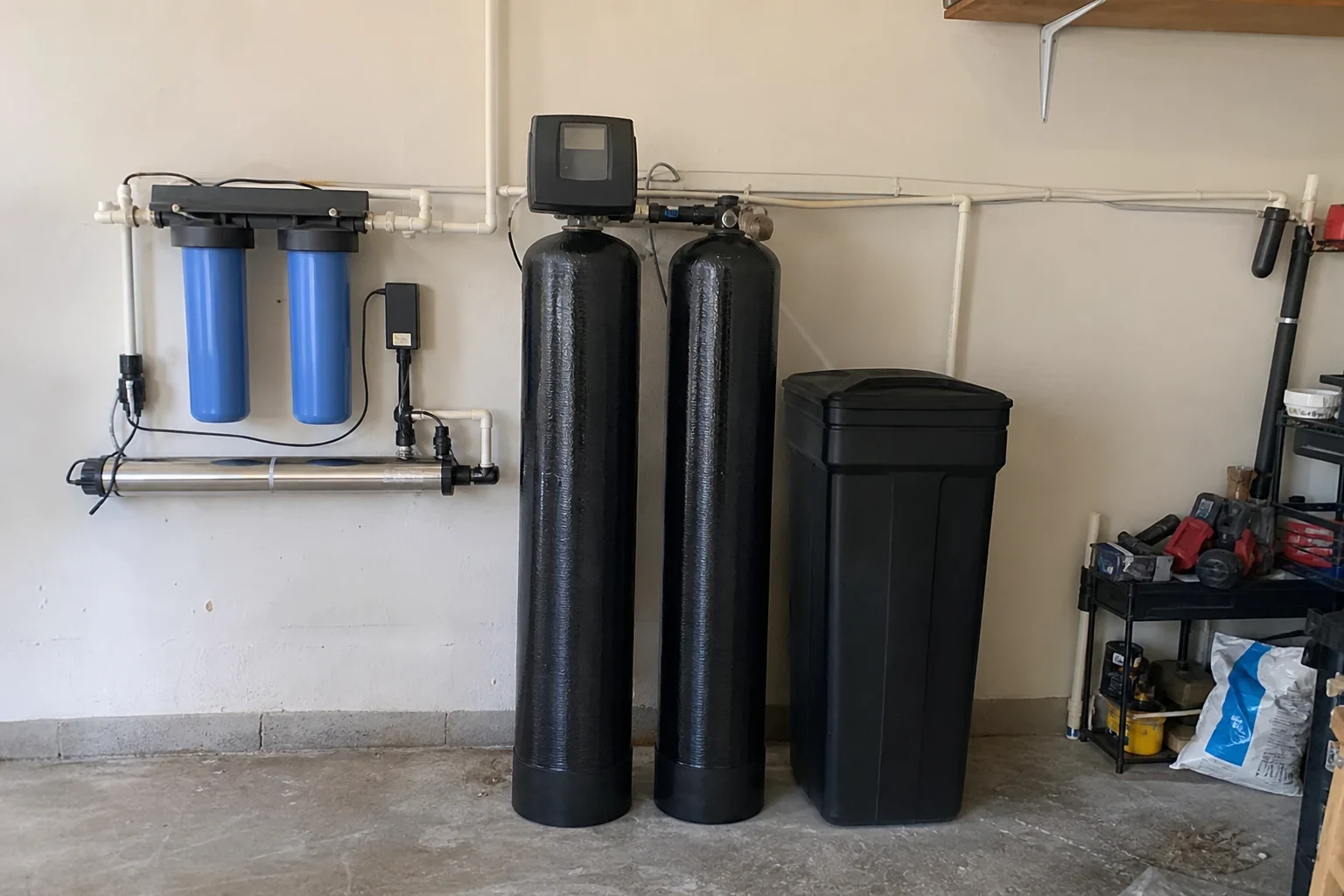
Scale builds fastest when the water heater is working hardest. Tell us about your home and we will size a softener to your hardness and your household's water use.